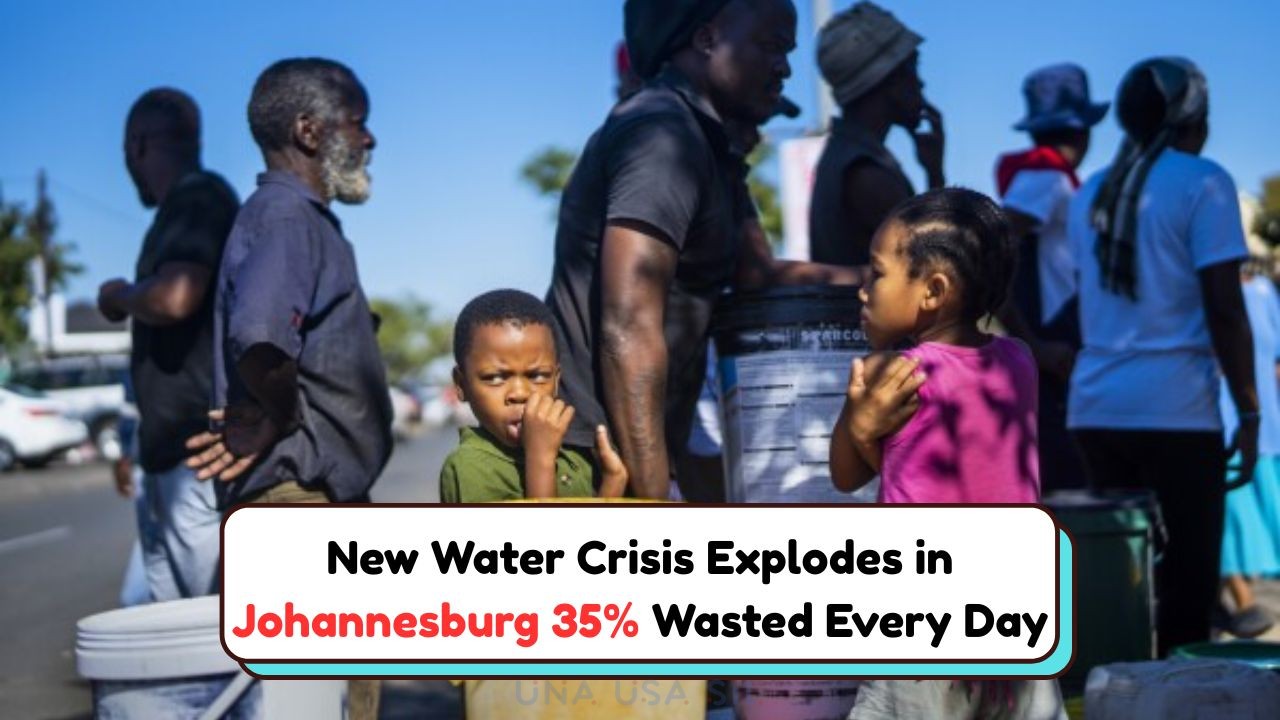
Johannesburg’s Water Crisis in 2023: As South Africa’s urban heartbeat, Johannesburg is grappling with a significant water crisis. The metropolis is losing a staggering 35% of its water supply daily, a situation that has been escalating over recent months. This wastage is primarily attributed to aging infrastructure, inefficient water management systems, and a lack of timely maintenance. As July approaches, residents are eagerly awaiting a proposed solution that promises to address this dire situation. The city officials have pledged to implement measures to curb this excessive water loss, but questions remain about the feasibility and effectiveness of these plans.
Understanding the Scale of Johannesburg’s Water Wastage
Water is a precious resource, especially in a country like South Africa, where droughts are not uncommon. In Johannesburg, the daily loss of 35% of its water supply is a cause for concern. This wastage not only strains the available resources but also affects residents who face frequent water cuts and shortages. The reasons behind this wastage are multifaceted. The city’s water infrastructure is decades old, with many pipes and facilities dating back to the mid-20th century. Over time, these have become susceptible to leaks and bursts, which are now a daily occurrence. Compounding this issue is the city’s rapid urban growth, which has put immense pressure on existing systems.

- Old and outdated water infrastructure
- Rapid urbanization without matching infrastructure expansion
- Inefficient water management and monitoring systems
- Lack of timely maintenance and repairs
- Inadequate funding for infrastructure upgrades
Proposed Solutions to Address the Water Crisis
The city has announced a comprehensive plan to tackle the water crisis, aiming to reduce wastage significantly by enhancing infrastructure and management practices. The July initiative is set to include a series of strategic interventions. Firstly, a significant investment will be made in upgrading the city’s water infrastructure, focusing on replacing old pipelines and improving leak detection and repair capabilities. Secondly, there will be an emphasis on modernizing water management systems through the integration of smart technologies that allow for real-time monitoring and efficient resource allocation. Additionally, public awareness campaigns will be launched to encourage water conservation among residents.

| Initiative | Details | Expected Outcome |
|---|---|---|
| Infrastructure Upgrade | Replacement of old pipelines | Reduced leakage |
| Smart Technologies | Real-time monitoring systems | Efficient water management |
| Public Awareness | Conservation campaigns | Reduced water consumption |
Impact on Johannesburg’s Residents
The water crisis has had a profound impact on Johannesburg’s residents, affecting their daily lives and routines. Regular water cuts have become a norm in many areas, forcing families to adapt by storing water and reducing consumption. Businesses, particularly those relying on water-intensive processes, have also faced challenges, with some incurring additional costs to ensure continuous operations. The proposed solutions, if effectively implemented, promise relief by restoring regular water supply and reducing dependency on contingency measures.

Community Involvement in Water Conservation
Community involvement is crucial in addressing Johannesburg’s water crisis. Active participation by residents can significantly bolster the city’s efforts to conserve water. Simple actions taken by individuals can collectively lead to substantial savings. Residents are encouraged to fix leaks in their homes promptly, use water-saving fixtures, and adopt water-efficient practices in their daily routines. Community groups and local organizations can also play a role by organizing workshops and seminars to educate the public about water conservation techniques.
- Fix household leaks promptly
- Install water-saving fixtures
- Adopt water-efficient practices
- Participate in community workshops
- Support local conservation initiatives
Monitoring Progress of the Water Crisis Solutions
The success of the proposed solutions to Johannesburg’s water crisis will heavily depend on effective monitoring and evaluation. The city plans to establish a dedicated task force to oversee the implementation of the initiatives, ensuring that each phase is executed as planned and any arising issues are addressed swiftly. Regular progress reports will be made available to the public, providing transparency and accountability. This approach not only helps in tracking improvements but also keeps residents informed and engaged.
| Monitoring Aspect | Responsible Entity | Frequency | Public Access |
|---|---|---|---|
| Infrastructure Upgrades | City Engineers | Monthly | Yes |
| Smart Technology Implementation | IT Department | Quarterly | Yes |
| Public Awareness Campaigns | Community Outreach | Bi-Annually | Yes |
Challenges in Implementing Water Crisis Solutions
While the proposed solutions are promising, several challenges could impede their successful implementation. Funding remains a significant hurdle, as the required investment for infrastructure upgrades and smart technologies is substantial. Furthermore, coordination between different city departments and stakeholders is essential to ensure a cohesive approach. There is also the challenge of changing public behavior, as ingrained habits can be difficult to alter, even with awareness campaigns.
Future Outlook for Johannesburg’s Water Supply
Looking ahead, the future of Johannesburg’s water supply hinges on the successful implementation of the proposed solutions and continued investment in sustainable practices. If the July initiatives yield positive results, it could set a precedent for other cities facing similar challenges. Long-term success will require ongoing commitment from both city officials and residents to prioritize water conservation and infrastructure modernization.
- Successful implementation of July initiatives
- Ongoing investment in infrastructure
- Continued public engagement in conservation
- Adaptation of smart technologies
- Enhanced cooperation among stakeholders
Johannesburg’s Commitment to a Sustainable Water Future
Johannesburg’s commitment to resolving its water crisis is evident in the city’s proactive approach. By addressing the root causes of water wastage and engaging the community, Johannesburg aims to secure a sustainable water future. Continued efforts in modernizing infrastructure, adopting innovative technologies, and fostering a culture of conservation are crucial steps toward achieving this goal.
FAQ Section
- What percentage of water is wasted daily in Johannesburg?
Approximately 35% of Johannesburg’s water supply is wasted daily. - What are the main causes of water wastage in Johannesburg?
The primary causes include outdated infrastructure, rapid urban growth, and inefficient management systems. - What measures are proposed to address the water crisis?
Measures include infrastructure upgrades, adoption of smart technologies, and public awareness campaigns. - How can residents contribute to water conservation?
Residents can fix leaks, use water-saving devices, and engage in conservation practices.
Timeline for the Proposed Solutions
The timeline for implementing Johannesburg’s water crisis solutions is ambitious yet crucial. The city plans to commence infrastructure upgrades and smart technology integration by July, with phased rollouts extending into the coming months. Public awareness campaigns are set to begin shortly thereafter, aiming to foster a water-conscious community. With rigorous monitoring and evaluation in place, the city hopes to see tangible improvements in water conservation and supply stability by the end of the year.

FAQ Continued
| Question | Answer | Details |
|---|---|---|
| What is the expected outcome of the infrastructure upgrades? | Reduced water leakage | Upgrading old pipelines |
| Who is responsible for monitoring the progress? | City Engineers | Monthly assessments |
| When will the public awareness campaigns start? | Post-July | Community engagement activities |
Community Engagement Initiatives
Community engagement is a cornerstone of Johannesburg’s strategy to combat the water crisis. Initiatives aim to educate and empower residents to take an active role in water conservation. Workshops, seminars, and interactive sessions are planned to provide practical tips and foster a sense of shared responsibility. By cultivating a community-driven approach, Johannesburg hopes to instill lasting water-saving habits among its residents.
Johannesburg’s Water Crisis in Numbers
| Aspect | Current Status | Target |
|---|---|---|
| Water Wastage | 35% daily loss | Reduce by 15% |
| Infrastructure Age | 50+ years old | Modern upgrades |
| Public Engagement | Low | High participation |
Effective Strategies for Water Management
Effective water management strategies are essential for addressing Johannesburg’s crisis. These strategies include implementing stringent leak detection systems, promoting the use of water-efficient appliances, and encouraging rainwater harvesting. By combining technological advancements with community engagement, Johannesburg can create a resilient water management system that meets the needs of its growing population.
Innovations in Water Technology
Smart Water Meters:
One of the key innovations being introduced is the use of smart water meters. These devices provide accurate readings and real-time data, enabling both the city and residents to monitor water usage effectively. By identifying patterns and pinpointing wastage, smart meters empower users to make informed decisions on water consumption.
Automated Leak Detection:
Automated leak detection systems are also being deployed to swiftly identify and address leaks. These systems use sensors and advanced algorithms to detect irregularities in water flow, allowing for prompt repairs and minimizing water loss.
Community-Based Solutions:
In addition to technological advancements, community-based solutions are being encouraged. These include neighborhood water conservation clubs and collaborative projects that unite residents in the fight against water wastage.
Policy Changes:
Policy changes are being considered to support water conservation efforts. These may include incentives for water-saving practices and penalties for excessive usage.
Long-Term Strategies:
Long-term strategies focus on sustainable water resource management, ensuring that Johannesburg can meet future demands without compromising the environment.